
 Posted by
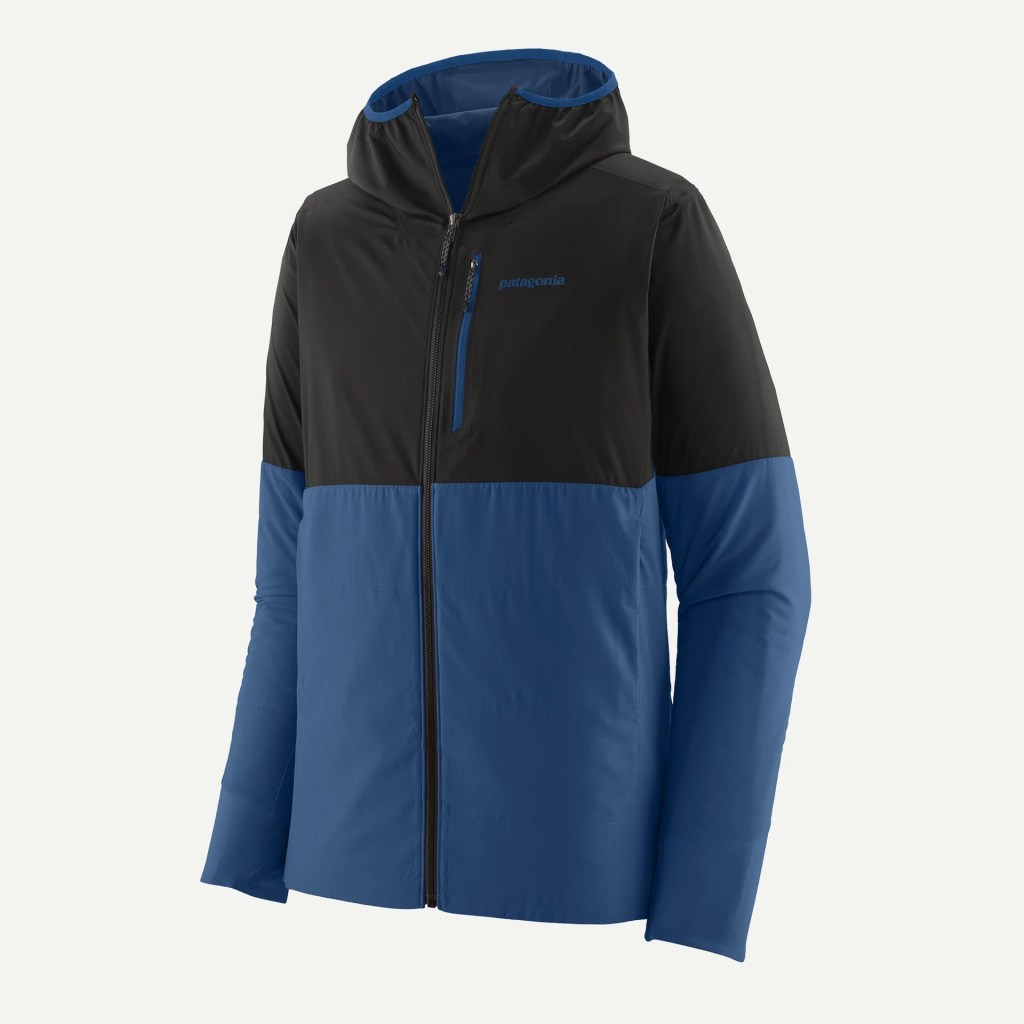

After having raved about the Patagonia Nano-Air Ultralight Hoody in my review back in Autumn 2025, I was delighted to be given the opportunity to test it’s most recent offspring the Nano-Air Ultralight Freeride Jacket over this winter 25/26.
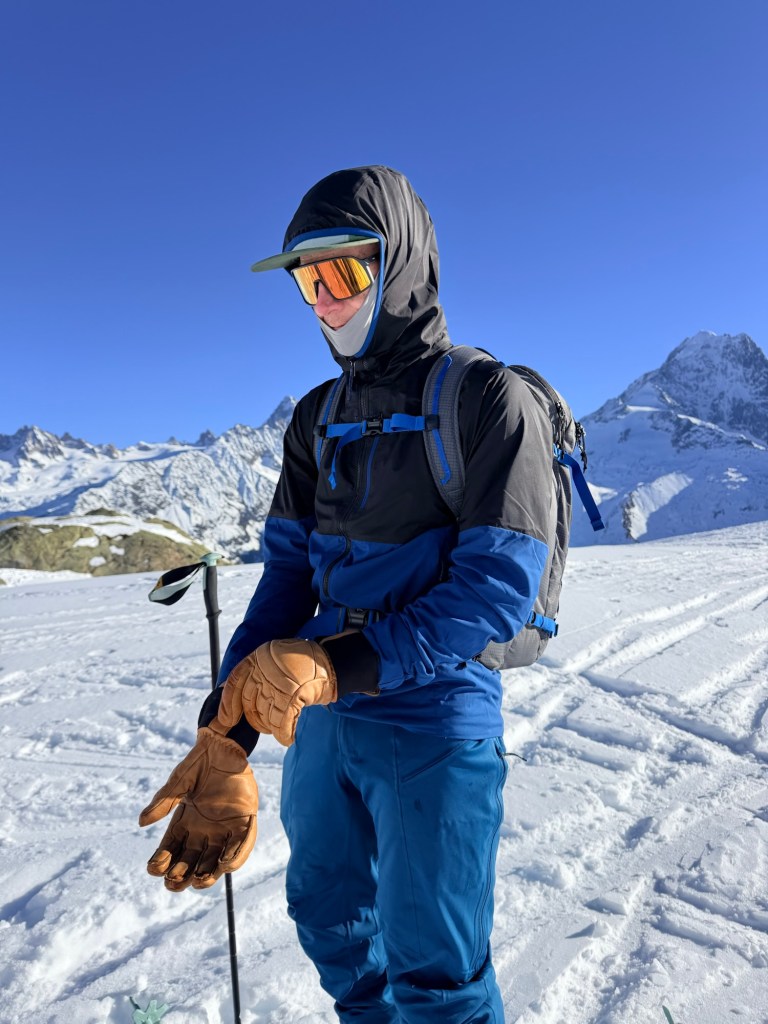
The Nano-Air Ultralight Freeride Jacket is aimed specifically at skiing (hence the ‘Freeride”) although it seems much more a solid ski touring piece than an out and out freeriding piece.
Patagonia say:
“In ski touring, the weather and the intensity of the effort vary constantly. Specially designed for skiing, this jacket combines a weather-resistant material on the hood and shoulders and lightweight insulation on the bust to offer the perfect balance between protection and breathability. Model made in a Fair Trade Certified™ workshop.”
I’ve used this jacket out here in the Alps, for ski touring and lift served skiing since mid December. For uphill it’s fantastic, paired with a mid to heavy weight base layer depending on conditions, it regulates my temperature well, blocks wind, shuns any light precipitation and breathes effectively. I don’t really feel like I need to chop and change layers as it performs so well in all conditions and in spring I can see me happily wearing this as my outer for sunny corn descents. The hood is well designed to fit under a climbing or skiing helmet and is comfortable over a cap/buff combo (like the cool Freeride youths wear).
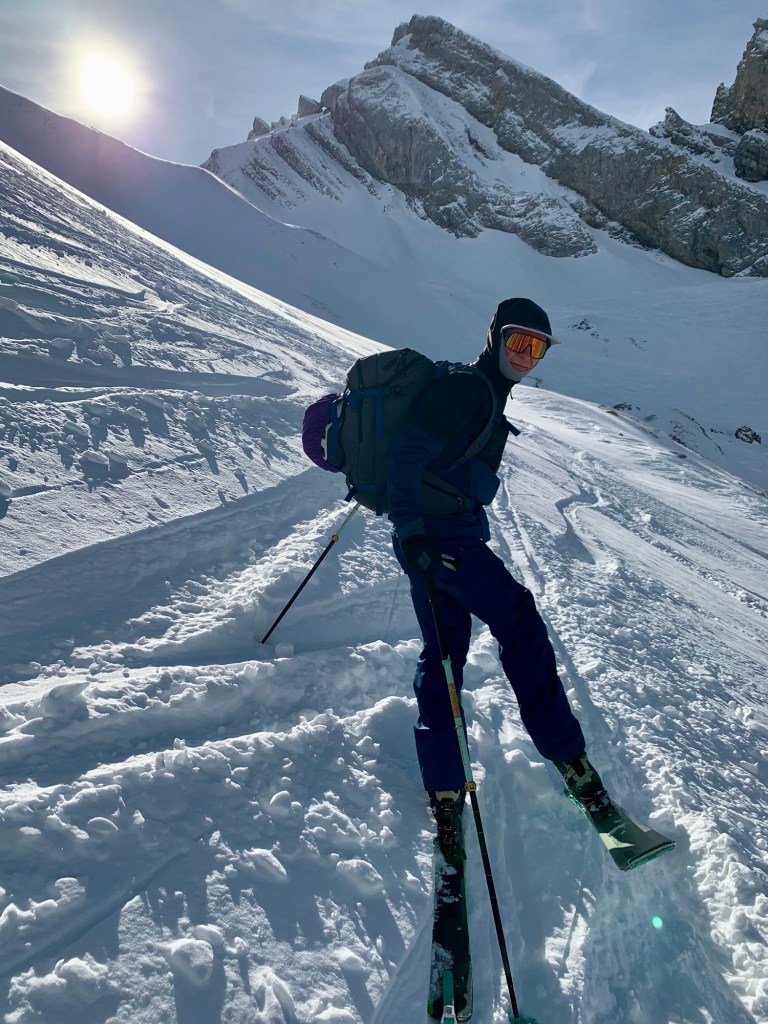
On downhill days I find it to be the perfect mid-layer under my Gore-tex shell. I usually opt for something like a Capilene Cool T, R1 Air Crew and then the Nano-Air with my shell over the top and if it’s really cold on the lifts, maybe a DAS Light on top of that. This feels like a really versatile layering system and pretty much exactly what I use on my upper body for winter ski touring.
Let’s look at the features of the Nano-Air Ultralight Freeride in a little more detail, starting at the top. The hood is thin and comfortable and as I already said, works well over a cap or under a helmet. It zips up over the chin and doesn’t interfere with peripheral vision. It was well cut and stays put without the need for drawcords or elastic.
The shoulders, chest, upper back and hood offer an increased level of water resistance on snowier uphill days where you want to avoid wearing a shell, this is not waterproof but a nice compromise between breathability and moisture protection.
The jacket is cut with skiers in mind. It’s longer in the body, and comes down lower over your bum. It offers exceptional freedom of movement during ascents and descents as well as under a backpack. The sleeves are well thought out, don’t ride up when your hands are above your head, and the cuffs are tailored and stay put without elastics. They also sit cleanly underneath gloves. For size comparison I’m 175cm and 69kg and small is perfect for me.
(available XS to XXL and in female specific cut, colours and sizes)
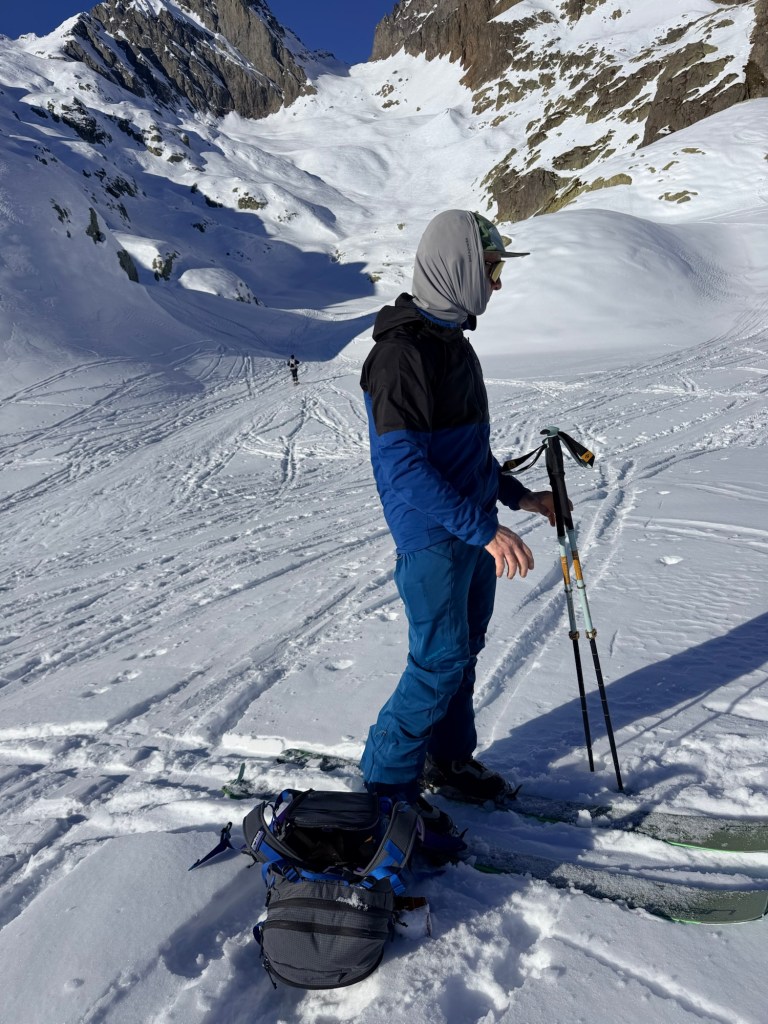
It has 3 discreet and well placed, zipped pockets. One on the chest, is large enough (only just) to take an IPhone 17 Pro Max and 2 hand pockets are big enough for essentials but flat and discreet enough not to interfere with a climbing harness or the waist belt on your pack (as long as they’re empty).
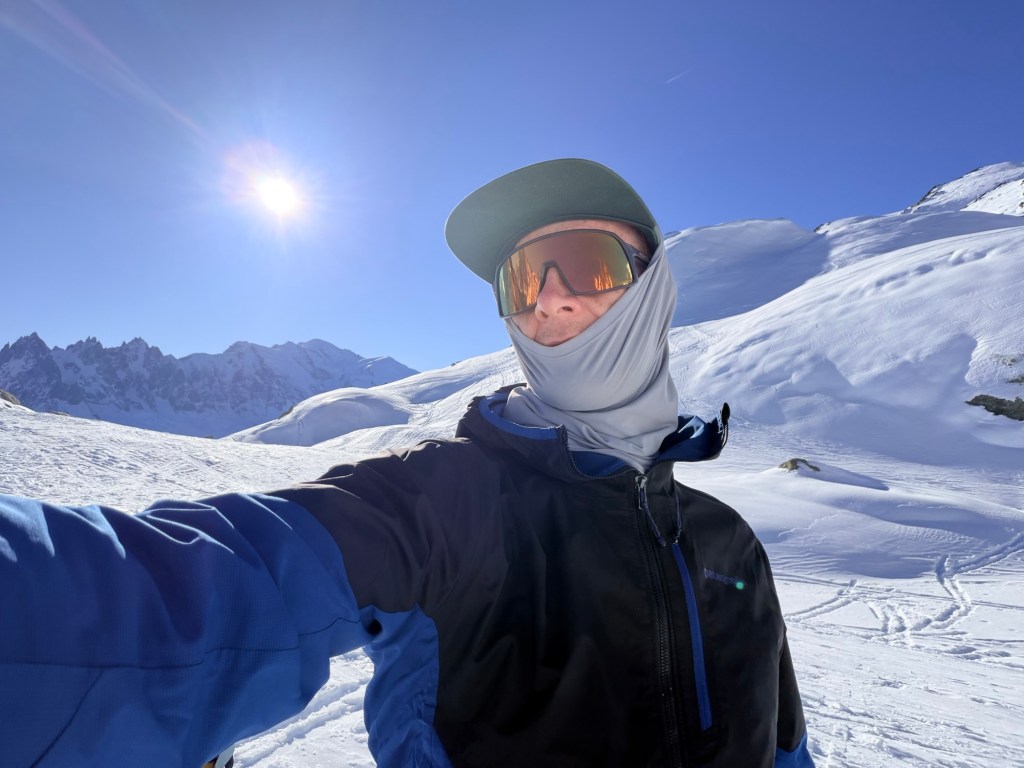
So how warm is it? Well, let’s first remember it’s a mid-layer not a down jacket or belay jacket. And warmth is pretty subjective. But for me, I’ve found it easily warm enough for cold downhill days with a shell on top and not too warm for long uphills. For prolonged stops on cold days I’d generally throw on my belay jacket. The insulation isn’t used throughout the jacket and this is one of the reasons it’s so comfortable when you’re moving. I never really feel sweaty but not cold either.
Patagonia say that they achieve this by using targeted ultralight insulation:
“Featherweight, stretchy and breathable insulation, FullRange™ of 20 g/m² that provides optimal warmth at the bust and arms; ventilated panels on the inside of the sleeves to evacuate heat and reduce the volume of material.”
From my testing so far, it works and well.
The fabric, both outer and lining, are 100% recycled ripstop offering exceptional breathability, stretch and abrasion resistance, with (the already mentioned) additional weather protection at the shoulders and hood. The upper body uses 2.4-oz 100% recycled nylon stretch ripstop face fabric bonded to a 100% polyester circular-knit backer, with a durable water repellent (DWR) finish made without intentionally added PFAS, whilst the lower is 1.6-oz 30-denier 100% recycled polyester air-permeable shadow stretch ripstop with a DWR finish, again made without intentionally added PFAS. The upper body is heavier and thus more durable to combat high wear areas such as pack straps or carrying skis on your shoulder and is also weatherproofed, whereas the lower body can afford to be more breathable and less durable. The combination proves to be really effective.
The Nano-Air Ultralight Freeride Jacket is a really impressive midlayer aimed at backcountry skiers and tourers. It’s refreshing to see the thoughtful design specifics that meet the needs of this particular activity, rather than opting to design a one size fits all, pub to the slopes to the crags, kind of piece that a lot of brands have been producing recently. That’s not to say it doesn’t look good for “‘apres” or work well for hiking and climbing too. However for rock and alpine climbing, the cut and hood of the standard Nano-Air Ultralight Hoody are much better I’d say. Hats off to Patagonia for designing a great jacket, and I’m looking forward to taking it on some longer spring tours later in the season.
Find out more and buy at the Patagonia website
RRP: £270/€300
About the author
Kevin is an IFMGA Mountain Guide based near Chamonix, France. He specialises in bespoke multi-pitch and alpine rock climbing, ice and mixed climbing and ski touring adventures. You can check him out @kevinavery.mountainguideon Instagram or email truenorthalpine@gmail.com to make a booking enquiry.
 Climbing Gear Reviews