
 Posted by


Earlier in the year we reviewed the COROS VERTIX 2 and were impressed with the chunky beast of an outdoors GPS watch. The COROS APEX 2 Pro is a more svelte watch, packing all the same software functionality into a lighter more compact housing with only a slightly smaller screen real estate.
COROS kindly sent me the Kilian Jornet Edition in a stylish black and white colour way. Now Kilian is an obvious GOAT in the COROS athlete stable, impressive in so many ways both in terms of his athletics achievements and his environmental stance but should you fork out an extra £50 just for this version? If it was just the colour way I’d say no (unless you’re a dedicated fan!) though it is the most stylish colour way IMHO. However in the original bundle you actually get an extra strap worth £24 and a NNormal (Kilian’s new company) race cap worth £35 so actually you get your money’s worth (this bundle is sold out online now). Sadly it seems the original special package with extra strap and cap has been discontinued.
So as an outdoor athlete why would you choose APEX 2 Pro over the VERTIX 2? Well first up they both do a brilliant job and it is hard to imagine either of them not meeting the requirements of a trail runner, climber, mountaineer etc. As I’ve already mentioned as far as software functionality goes they are identical. The APEX 2 Pro is a more recent watch so there have been some hardware updates. The wrist based heart rate measuring sensor is new and COROS state:
Our new wrist optical heart rate sensor features a 5-LED system with 4 photodetectors in a customized layout, protected by a smooth, scratch- resistant cover. With advanced signal noise removal algorithms, your APEX 2 and APEX 2 Pro deliver a new level of heart rate accuracy
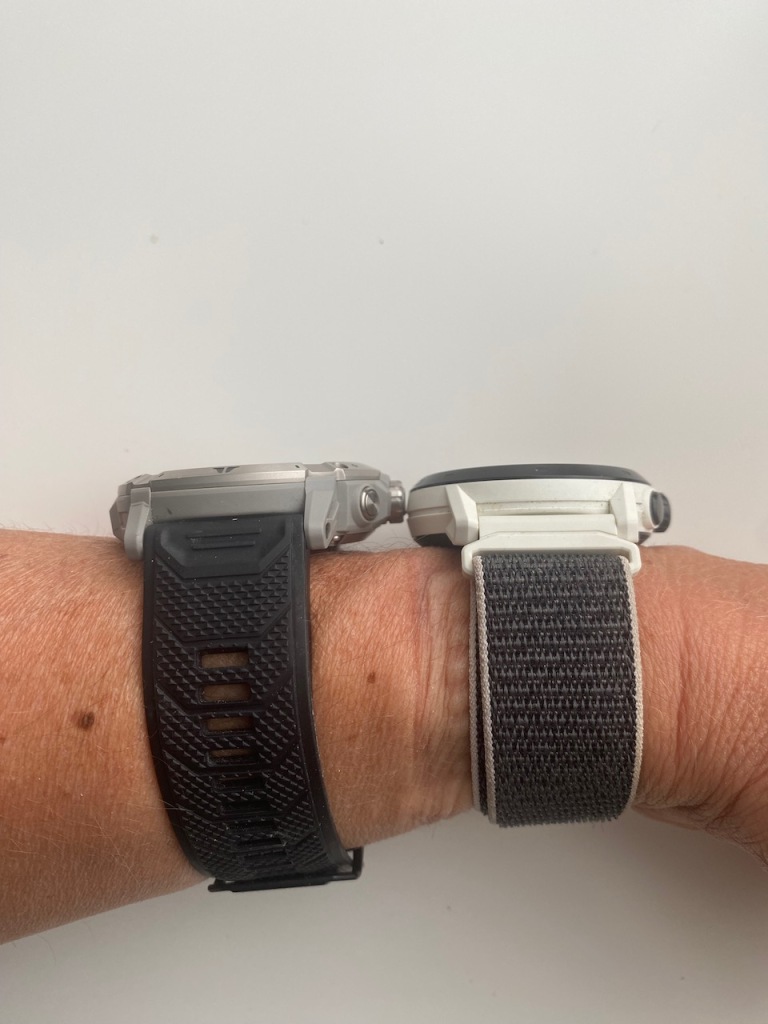
My experience of the new sensor bears this out to an extent. When using the APEX 2 Pro I had fewer instances of anomalous readings than I did with the VERTIX 2 and in a gym situation it worked perfectly but out on the bike and I still had a few weird readings and once whist out running. For me wrist based HR is a little unreliable (probably due to the morphology of my wrist) and with the APEX 2 Pro some of this better performance might also be due to less ‘bounce’ as the APEX 2 Pro is lighter. This lighter weight and slimmer profile make the APEX 2 Pro much less obtrusive watch to wear, easily slipping under tight fitting athletic clothing when running, biking or XC skiing which also means that clothing is less likely to ’tilt’ the watch and interfere with the optical HR sensor readings. Depending on you aesthetic sensibilities it may also make it more appealing as an everyday wear in comparison to the VERTIX 2 which screams rugged! Likewise for those with a smaller wrist the APEX 2 Pro is likely more comfortable and there is its little sister the Apex 2 which is smaller again. The GPS antenna arrangement is different in comparison to the VERTIX 2 making it potentially more accurate and I noticed some minor improvements over the VERTIX 2 but none that would make me choose one over the other.
The build quality again seems excellent; you get a scratch resistant sapphire glass, PVD coated titanium bezel (again very scratch resistant and water resistance to 50m. The VERTIX 2 has water resistance to 100m and perhaps a slightly more rugged build with a ‘reinforced’ crown. Certainly the screw bars attachment for the quick release strap is more robust than the quick release spring bars on the APEX 2 Pro though even these sit in metal inserts to avoid wear and tear so there’s no doubting the APEX 2 Pro is built to last. I’ve been using them both extensively now for the last few months and the most I can see is a microscopic dint on the bezel of the APEX 2 Pro – see if you can spot it too in the pic below!

In use everything I wrote in the original review of the VERTIX 2 still stands and I continue to find the COROS watches reliable, accurate and intuitive to use.
During the review period COROS released a major update to their app as well as some additional firmware updates underscoring their commitment to improving both watches and software. The new app software includes a number of usability tweaks and improvements as well as a new headline feature. The new feature is in app route planning which is a definite boon. Previously I was using Komoot or FATmap to plan routes on my phone if I was away from the laptop and although this worked well it was hardly seamless. With the updated app you can do everything within the COROS ecosystem. The screen grabs below show the basics of plotting an approach to climb on the the Ben’s north face. Firstly search for the start point (Torlundy), select the mode Run (running or walking) plots along roads, footpaths and bridleways, Bike; plots along roads and bridleways, Manual (just plots a straight line between points). The second image shows the plot from the ‘North Face’ car park to the CIC hut using ‘Run’. The Final screen grab illustrates ‘Manual’ plotting up into Coire na Ciste and one of the issues in mountain terrain with the OpenStreet Mapping as there are no cliffs shown on the map!!!

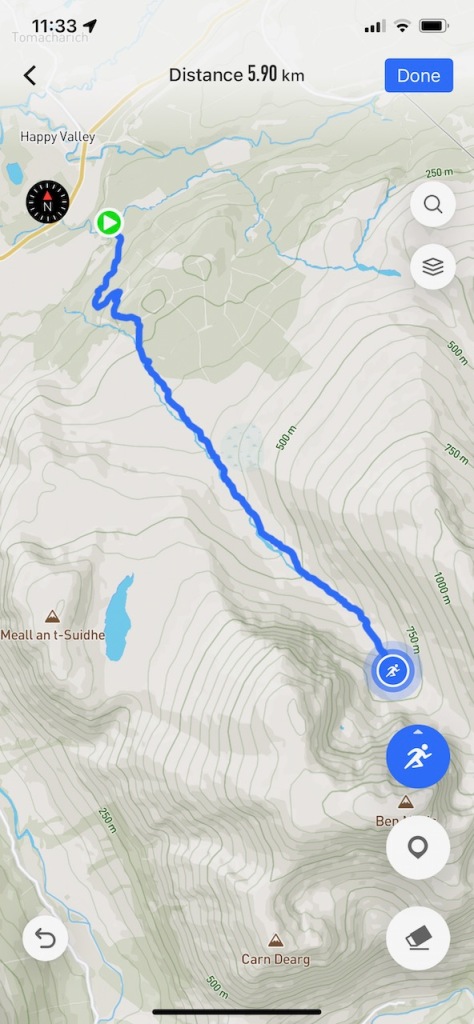

For some purposes I will still use FATmap as it gives access to OS, IGN etc. topological maps with more detail including cliffs/crags. However for day to day trail running, road and off road riding the COROS app does a good job.
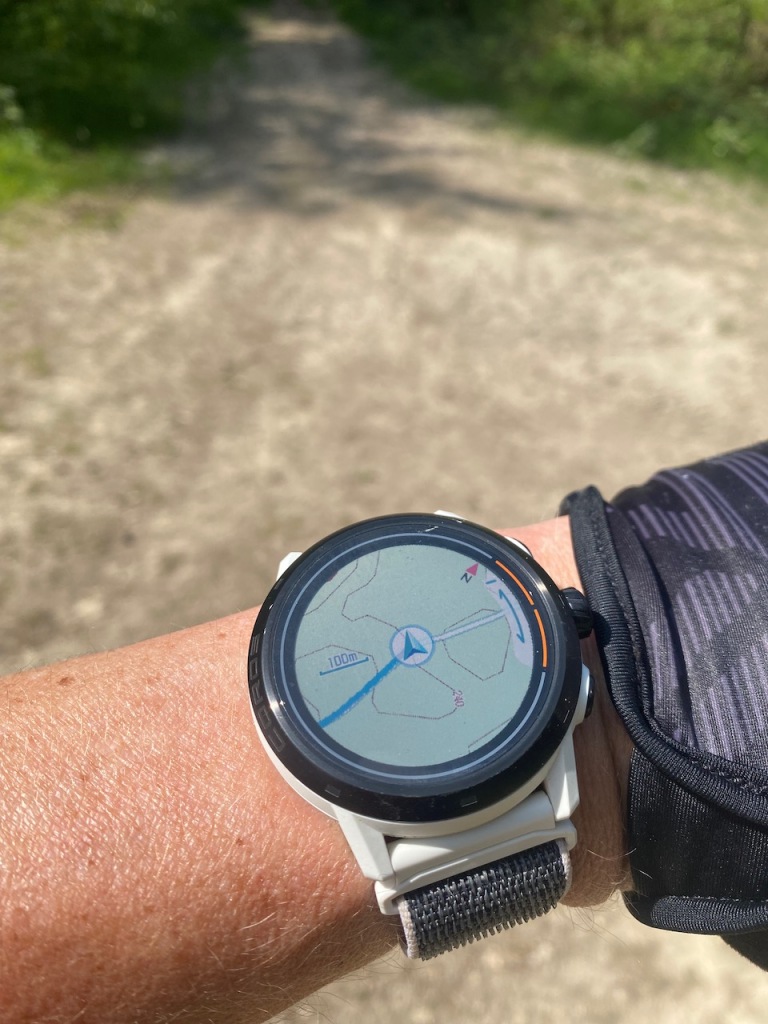
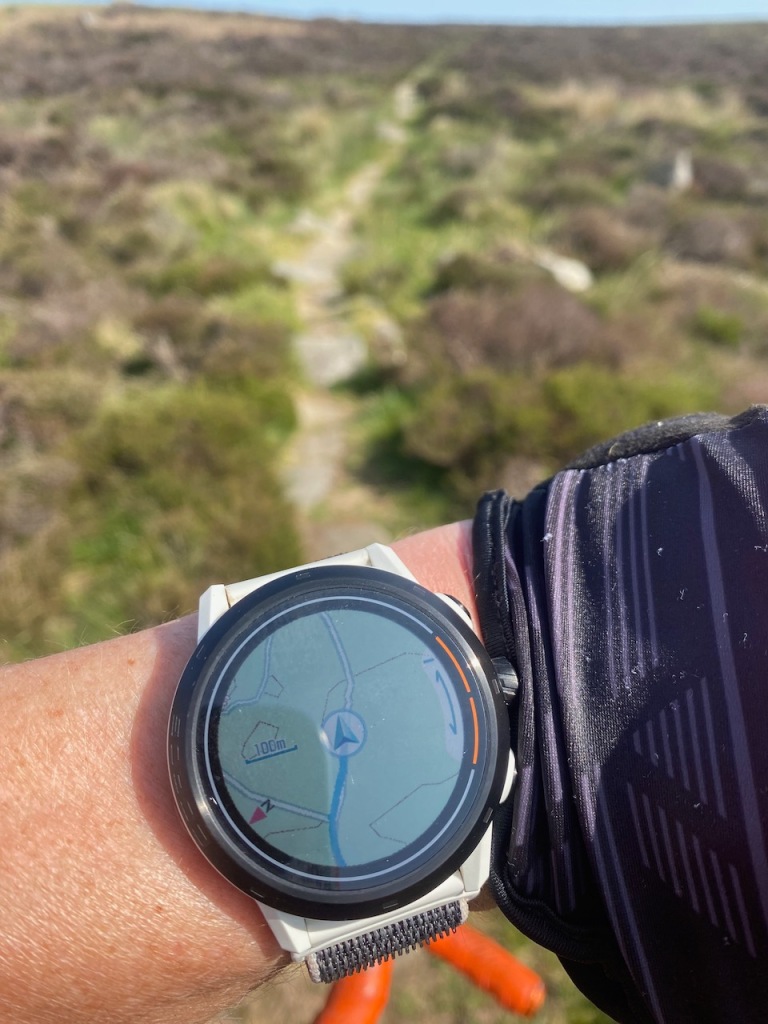
I’ve been finding the ‘Effort Pace’ metric really useful in my post injury return to running. Essentially this gives an estimate of your flat running pace by compensating for the current relief you are running on. This has confirmed that I’m definitely an ‘uphill’ sort of person running relatively faster uphill than on the flat or descents! The running fitness algorithm has been improved and certainly gives a more realistic race time prediction now for me anyway and sadly I’m no longer predicted a sub 3:30 marathon! Additionally it is easier to unlock the EVOlab metrics without performing 7 days of running. Overall the new app is a significant improvement.
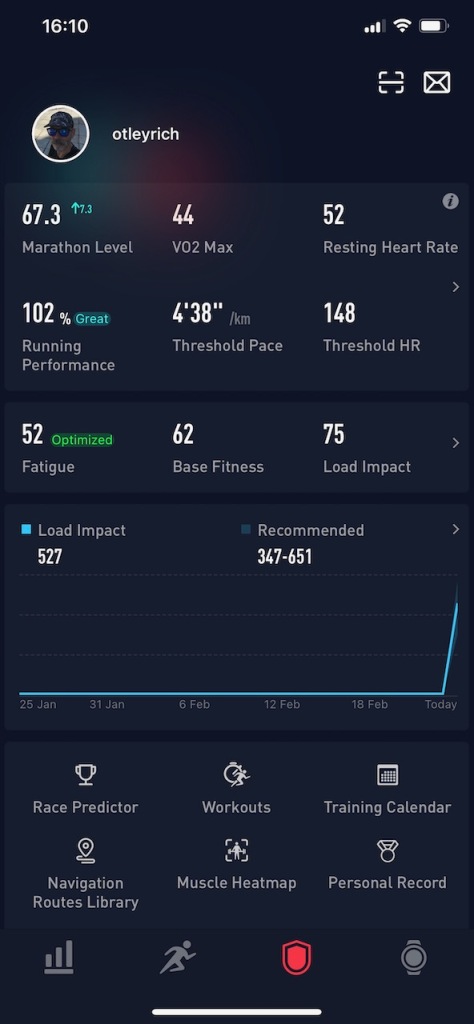
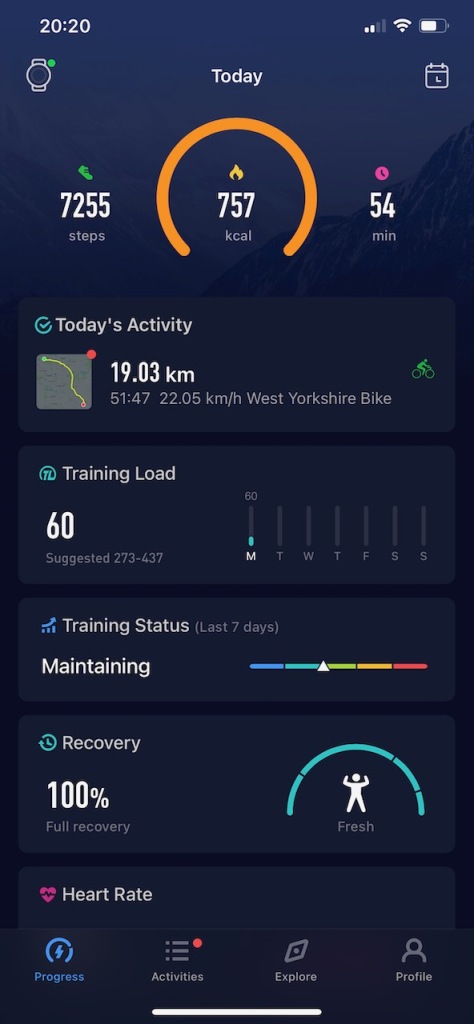
With longterm use of the COROS software I have become aware of some areas for improvement. Firstly you cannot edit a training session to remove anomalous data and this then skews your ‘recommended’ training metrics for the next 4 weeks. This is something that really needs fixing. if you look at the data below a rather obvious anomaly appears on the 17/5.

This was the result of using the VERTIX 2 on the nifty (but expensive) carabiner accessory without a chest strap. Apparently I sustained a 170bpm HR for 4 plus hours moderate sport climbing – those 6Cs must have been terrifying! Secondly at present it is not possible to create a training program with anything other than Running, Cycling, Swimming and Strength components. This may work for the majority of users but if COROS want to tap into the outdoor athlete sector they will need to expand this selection.
Some of these limitations may be the dependant on the algorithms that COROS have developed to calculate fitness, fatigue and recovery with these being based on those three core sports for now. Given COROS’ track record of frequent updates and development I am optimistic this will be remedied in the near future.
So if you are to choose between the VERTIX 2 and the APEX 2 Pro which should you choose? To keep it simple if you’re an alpinist/mountaineer then the VERTIX 2 is probably the best fit but for anyone else then the APEX 2 Pro is probably a better choice. The APEX 2 Pro is lighter, more compact, has sufficient battery life, decent screen size and enough water resistance. However things are never that simple and even Kilian opted to switch to the VERTIX 2 for mountaineering tasks like his spring attempt on the Hornbein route presumably for the added battery life. The APEX 2 Pro gives you 75 hours (standard GPS) – more than enough for most ultras even at a pedestrian pace. However he VERTIX 2 gives you 140 hours (standard GPS) which gives you a buffer if you’ve got an approach then bivi (or hut stay) followed by a long route. Remember these figures drop to 26 hours and 50 hours respectively if you go for ‘Dual Frequency’ so the VERTIX 2 is a safer bet for big alpine routes, you can fully charge up in the valley and then not have to worry en route.
PROS
- Large, clear screen
- Slimline formfactor
- Excellent battery life
- Updated optical HR sensor
- More competitive price point
CONS
- Lacks the awesome battery life of the VERTIX 2
- Not as waterproof/rugged as VERTIX2
SRP £449 (standard) £499 (Kilian Edition)
 Climbing Gear Reviews