
 Posted by
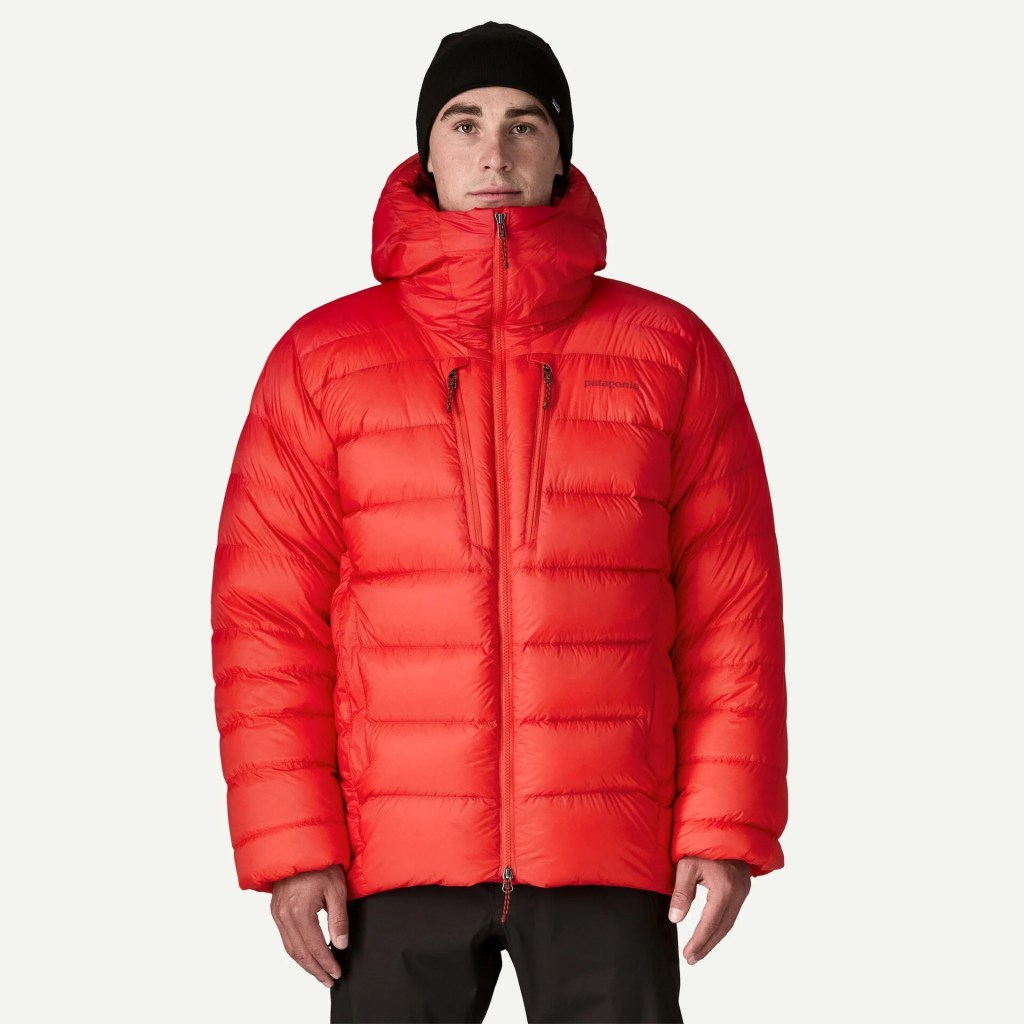

Over this past winter season, the Grade VII Down Parka has lived in my pack from the mountains of Chamonix to frozen waterfalls in northern Norway. It’s been on long alpine routes, thrown on during winter days at the sport crag, and relied on during days out guiding in proper cold weather.
This is not a jacket you think much about once you put it on, and that’s probably the highest compliment you can give a piece of equipment. It just works.
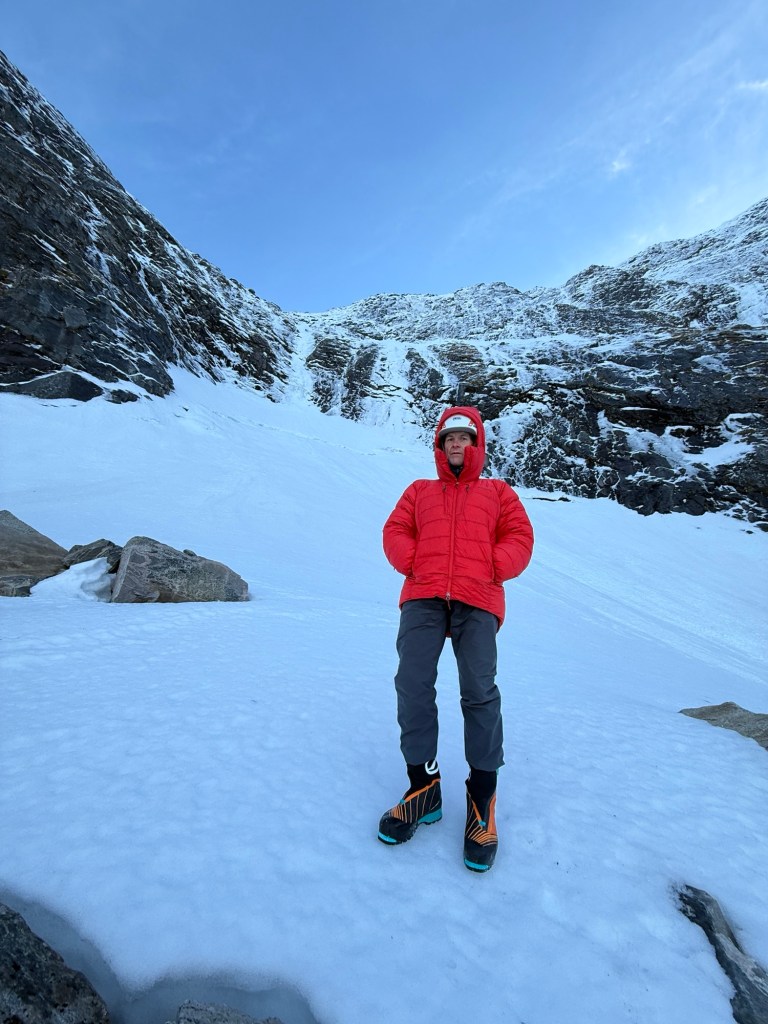
In winter, during my work as an IFMGA guide, I may be leading pitches as efficiently as possible, then whilst my guests are climbing, I cool down quickly. Once cold, it’s harder to get going again when it’s time – but with grade VII I don’t worry about that. It’s toasty whether I’m belaying on alpine routes, bivvying, or trying to keep warm between attempts at my sport project.
Warmth is what the Grade VII is built for. It goes on over everything—shell, harness, helmet—and immediately traps heat. There’s no hesitation, no fiddling. You put it on, and within a minute or two, you’re comfortable again.
I’ve used it:
- On north-facing alpine routes in the Mont Blanc massif
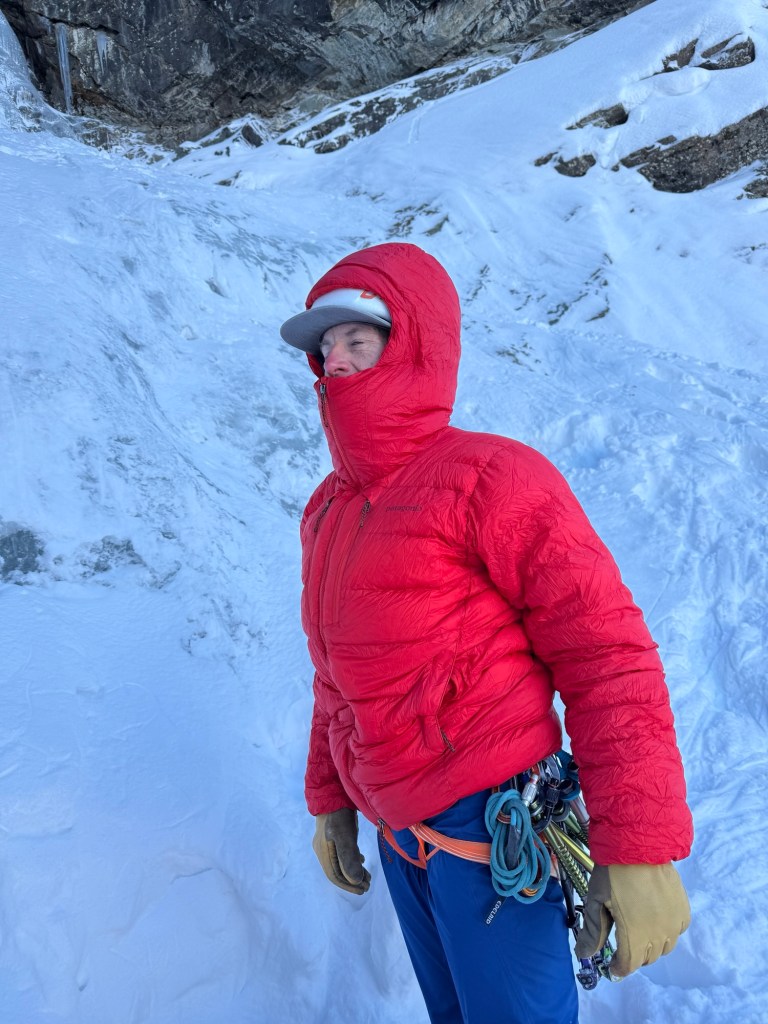
- Standing at belays whilst ice climbing in Arctic Norway in proper sub-zero conditions
- At sport crags in winter, where you’re alternating between efforts on a project and long rests
- Paired with an “elephant’s foot” half sleeping bag on a spring bivi to save overall sleeping system weight.
In all of those settings, it does the same job – keeps you warm.
Patagonia say:
“For thriving—not just surviving—in the most extreme places on earth, our overhauled Grade VII Down Parka is more weather resistant and warmer than ever. It represents years of building, testing and refining between our designers and ambassadors, resulting in a belay and bivy parka worthy of the most visionary lines on the most intimidating peaks. Made in a Fair Trade Certified™ factory.”
When revamping the Grade VII from the previous version, designers were told to make the best down parka they could and not worry about the cost. And that is totally apparent in the finished product. High quality materials and attention to every small detail, but a fairly high price tag.
There are many warm jackets on the market these days. But not so many that stay truly warm when you’ve stopped, exposed, and slightly damp from the day. The Grade VII does.
The loft from the 900 fill power down, is substantial. This means the warmth is also substantial.
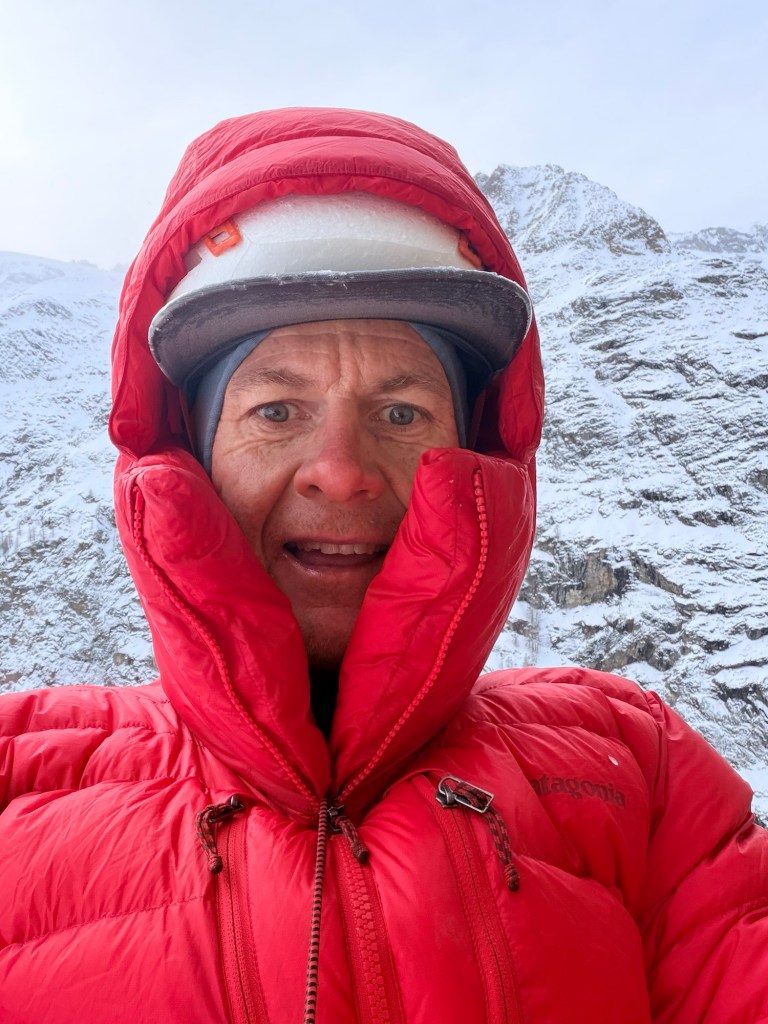
In Arctic Norway we had cold, dry air and some long belays and it was exactly what was needed. We also had some damp days and I was interested to see how the parka stood up. I definitely noticed the loft being compromised a little, but this thing has warmth in reserve so it didn’t matter.
- Wind resistance is solid
- Sheds snow easily
- Light moisture isn’t an issue – but not a jacket to wear in the rain
This is definitely a product to put on when you’re not moving. It’s not subtle warmth; it’s immediate and quite aggressive. If you try to hike uphill in it, you’ll overheat quickly. But that’s not what it’s for.
The cut is generous, as it should be. You can throw it on quickly over a full system of shell and midlayer, plus a climbing harness, helmet and other hoods, without a battle. The sleeves are long enough, the hem drops low enough, and nothing rides up when you’re reaching or adjusting anchors. It has a 2 way zip so you can still access the belay loop on your harness effectively.
The hood works properly over a helmet and actually protects your face, not just the top of your head. In wind or spindrift, that makes a real difference.
Small details that stand out over time:
- Zips are easy with gloves
- Pockets are usable and warm – they are insulated both inside and out.
- The collar seals well without feeling restrictive
Nothing feels complicated about the Grade VII Parka. It just works.
One concern that I had was the relatively light outer fabric. It feels featherweight and I definitely wouldn’t want to climb pitches of Cham granite in it (I’d probably burst into flames its so wam). However, after a full season, it’s held up better than expected. No holes or rips, however I am pretty careful with it.
That said, you do need to be a bit aware around sharp rock and ice tools, crampons and screws etc. But for normal use—belays, bivvies, hanging out at the crag—it’s totally tough enough!
NOTE: If you’re looking for the warmth and luxury of down (although not as warm as the Grade VII) but with a more durable outer fabric, it might be worth checking out the new Durable Down Parka .
For the warmth the Grade VII provides, the weight of this jacket – at 712g – is more than reasonable. It’s the biggest belay jacket I own and often, I’ll opt for something lighter if it’s for “just in case”. However to put it into context, Patagonia’s beefiest synthetic belay jacket the DAS Parka is actually only 150g lighter, way less warm and way less packable.
The Grade VII stuffs easily into its own stuff sack and is acceptably sized, that i can clip it to the back of my harness whilst ice climbing. Small detail, but the stuff sack lacks a clip in loop.
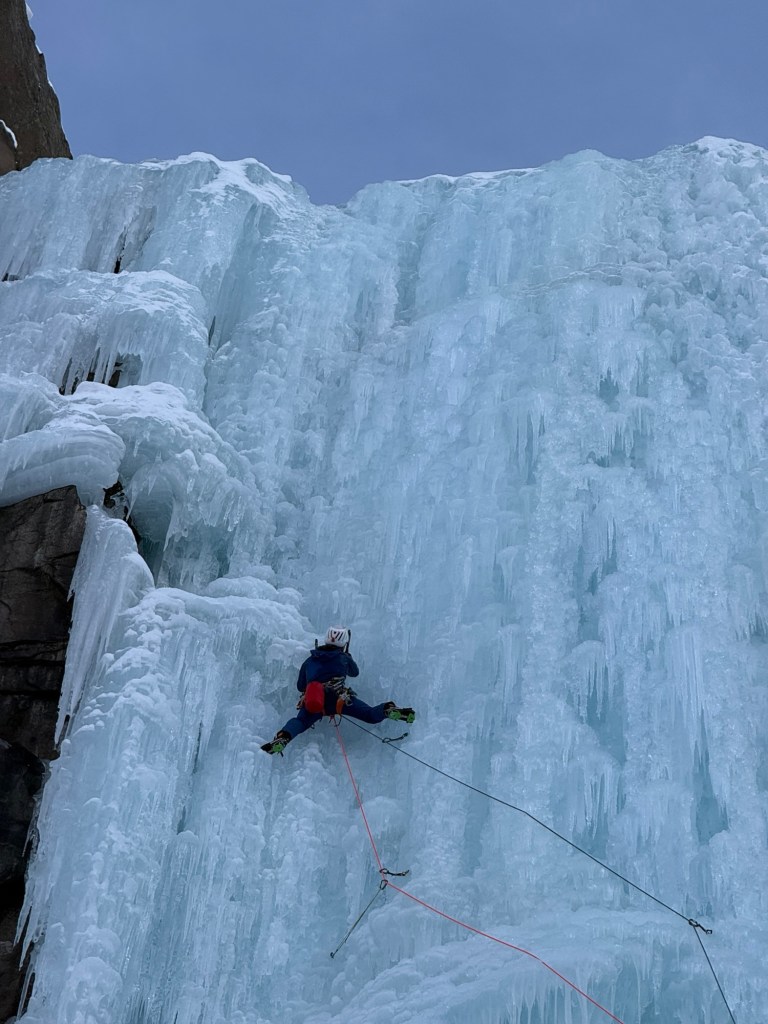
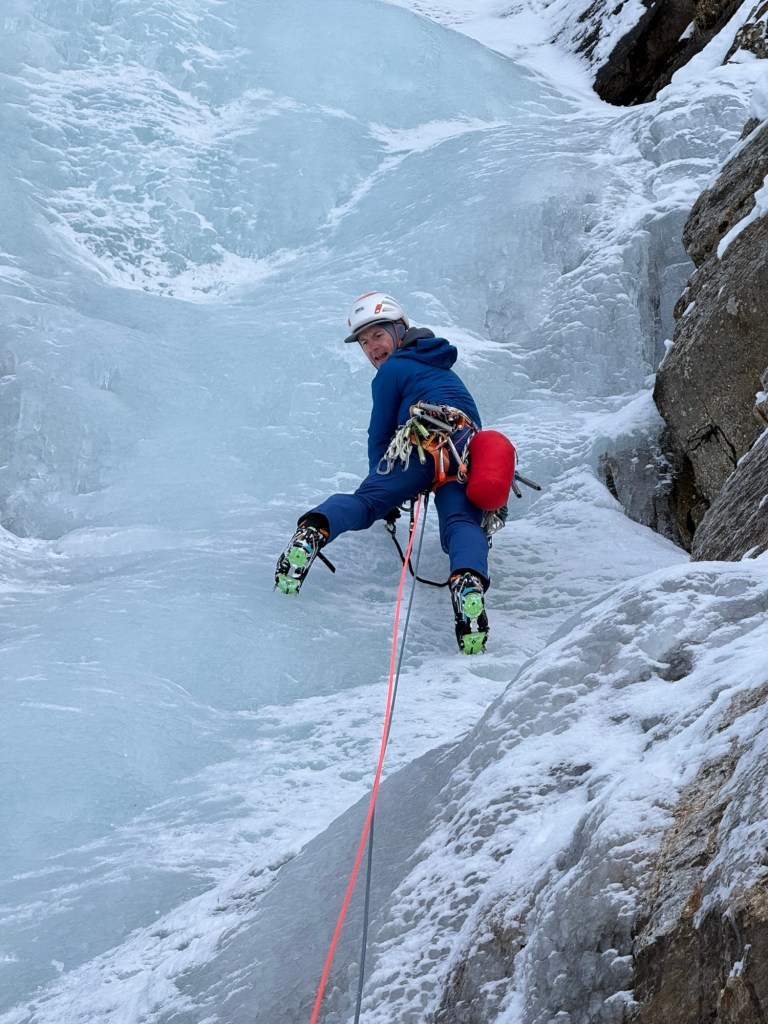
After a season of consistent use, what stands out is not any single feature, but the overall quality, ease of use and warmth. It performs the same way every time:
You stop, you put it on, you stay warm.
Buy the Grade VII Parka if you:
- Spend long periods stationary in cold environments
- Guide, climb, or belay in winter conditions regularly
- Need dependable warmth rather than versatility
- You’re looking for quality and dependability over cost
This is a serious and dependable belay parka but, it’s definitely not the cheapest.
Price: £900/€1000
Find out more and buy from the Patagonia website.
About the author
Kevin Avery is an IFMGA Mountain Guide based near Chamonix, France. He specialises in bespoke multi-pitch and alpine rock climbing, ice and mixed climbing and ski touring adventures. You can check him out @kevinavery.mountainguide on Instagram or email truenorthalpine@gmail.com to make a booking enquiry.

